woberto Report This Comment Date: July 13, 2009 05:07AM
I agree, but...
jgoins Report This Comment Date: July 13, 2009 10:11AM
Legalize marijuana is a fine concept but guess what, there won't be anywhere
you could smoke it. Places we can smoke cigarettes are dwindeling down so by
the time the legalize pot there will be nowhere you can smoke it.
lester Report This Comment Date: July 14, 2009 01:45AM
ain't that the truth By the time big brother gets done we will have to smoke
in a cave,not before we spend thousand of dollars in hepa filters, ect lol in
Ontario Canada where i live , u now cannot smoke in any motorized vehicle that
has a child under 16 in it ... I see 14 and 15 year olds standing in front of
the high school puffing away every morning lmao
woberto Report This Comment Date: July 14, 2009 02:53AM
You cannot wear, exude or produce anything that might be offensive to another
person.
If I were to take offence to men's deodorant I would be in a minority and not
get anywhere. But if I could get enough people to joing me I could have some
legislation brought into effect.
In practice this means that anything legislated against (smoking in clubs, cars
with minors etc) should have only come about due to a well supported campaign by
persons who are seriously offended. This is not the case, most of these laws
come into effect becasue the government is doing what it claims is "in the
best interest of the people".
Rather than have my elected officials do what they think is best for me, I would
rather vote on such things (Even though I despise smokers).
I saw a guy refused his seat on an aeroplane because his shirt read "fuck
off" or something to that effect. I have read about this on several
occasions and this is just the beginning.
fossil_digger Report This Comment Date: July 14, 2009 04:39AM
i was wearing this

one time, a lady walks up and says, "i know what that
means, and it's extremely offensive". i just laughed and said, "i'm
glad the right person was able to translate that".

jgoins Report This Comment Date: July 14, 2009 10:45AM
Something needs to be done. We are getting less free everyday. It is not just
Odamna's fault either, although he is working hard for socialism, this has been
happening for decades. These laws are brought about by people who allowed
political correctness to run amuck. I will be curious to see what 2012 brings
about with our next presidential election and all. When I go to the polls in
2010 I intend to vote against every incumbent and I advise everyone to do the
same, we need to send a message.
GAK67 Report This Comment Date: July 14, 2009 07:57PM
Wow - you guys are even more stupid than I gave you credit for!
If you vote out all the incumbent politicians you will send a message alright -
a message that the general population is too stupid to actually look at the
issues in order to decide how they are to be governed.
If this campaign was successful all of the newly elected officials will believe
they were elected because of their campaigns and act accodingly, whereas in
reality they would have been elected because people were trying to 'send a
message'. The problem is they have no idea what that message is because your
message, or at least your motivation behind your message, is different to your
neighbour's, to the guy who lives 3 blocks away, to the woman at the checkout at
your local supermarket.
Edited 1 time(s). Last edit at 14/07/2009 07:59PM by GAK67.
woberto Report This Comment Date: July 14, 2009 09:57PM
Gak, your Prime Minister is/was a lesbian. How did that happen?
Then again, ours is Mr Sheen, what a blunder!
Edited 1 time(s). Last edit at 14/07/2009 10:00PM by woberto.
GAK67 Report This Comment Date: July 14, 2009 10:03PM
wobby - try and keep up. NZ parliament may have had a stoner rastafrian with
dreads, a transgendered ex stripper and a female PM with a manly voice and a
face longer than a horse, but they are all gone now. Our current PM does like
women, but is not one himself (John Key).
Mrkim Report This Comment Date: July 14, 2009 10:03PM
Your point is well taken and certainly one I've pondered in calculating the
effectiveness of such a campaign against the incumbents GAK. With that having
been said it seems no matter how you look at it a thorough house cleaning is
about the only reasonable course available to the American people in trying to
make their message heard.
The largest 2 issues hotly debated within the US in recent years have been
illegal immigration and the financial bailouts. While both issues were
continuously polled by multiple sources, impartial and otherwise, the public
outcries by Americans were pretty strong in how John Q Public felt about them
both. Both issues had the offices of our Representatives and Senators phones
ringing off the walls, their fax lines jammed and their email boxes stuffed to
overflowing with what John Q had to say and it was clearly AGAINST what was
voted in in regards to the bailouts and the vote on the amnesty for illegals
just barely squeeked by as a victory for the forces against the amnesty the
legislation proposed.
When the elected government refuses to do their job, which is to represent their
constituants wishes in their stead, what recourse is really left to us but to
simply unseat them? The American public by and large on both sides of the
political fence are beginning to feel as if no matter what is said or done by
the people that elected them, their elected officials simply refuse to act upon
the desires made known by the people themselves.
If this (unseating all incumbents) were to occur there would surely be current
elected officials unseated that DO work for the people that seated them, while
MANY more who do not would also be unseated which would seemingly be the greater
good in the long run.
A great number of the citizenry here are amenable to the concept of term
limitation for elected officials much like what the office of President is
limited to, which is 2 terms. This alone if enacted would have a great effect
on how our national government is run as no elected official could then hold
court in their little fiefdoms as is the case now and would put the legislative
branches back to what they were intended to be where each state received equal
representation in the national government. In todays system every long term
legislator holds more sway in congress than does a junior member, causing an
imbalance in the way things work and this needs to be eliminated.
The problem with getting this to ever become law of course is that the same
legislators would be required to agree to such a change, a majority in the House
and Senate approve it, then be signed off on by the President ...... which is
never gonna happen


Mrkim Report This Comment Date: July 14, 2009 10:25PM
BTW, back to the original topic ....
If the US government ceased its (totally ineffective) War On Drugs, took the
same $$ it spends now on this worthless pursuit and instead invested it in
education and treatment of addicts as opposed to simply making them criminals,
then paying for years of their incarceration costs it would seem much more
prudent in the long term. If we legalized drugs, oversaw their production and
sales and taxed them (and man they would tax the shit outta DRUGZ!) it would be
a move in a much more positive direction.
I mean really, a fuckin whole pound of cocaine/heroin/opium is no more dangerous
than a gun, a knife or even a stick/rock to humans. HUMANS are dangerous to
humans, plain and simple, the rest are just inanimate objects which become tools
used by humans.
There's an old saw that seems to fit well in this discussion which is "You
can't legislate morality." Anyone who doesn't see the laws against drugs
as an attempt to do exactly that would do well to take a little trip within self
and ask where exactly that thought resides if NOT in some sense of morality, and
of course for the even more inane, in some belief that they are their brothers
keepers and hence know what's best for them .... which is a whole 'nother kettle
of fish altogether

GAK67 Report This Comment Date: July 14, 2009 10:39PM
Mrkim - some well thought out responses there. I do take issue with one part
of your arguement though - the idea of not legislating for morality. In actual
fact most (if not all) criminal law is based on morality, albeit more widely
accepted than that relating to the legalization of drugs. Murder, theft
(robbery, burglary, fraud, etc), assault are all morality based laws. It's just
that when we get to things such as drugs the morality is not as clearly defined
in social norms depending on which part of society you are in at the time - i.e.
you would struggle to find people in society that would say cold blooded murder
was ok, but you would easily find people that say recreational drug use -
particularly marijuana - was acceptable. As we live in a democracy (I am
assuming that most people visiting here do) it should come down to what the
majority of us say.
Mrkim Report This Comment Date: July 15, 2009 01:12AM
The "people" here haven't even been asked about what they thought
about drugs in years, nor will they be. Of course that's the way
"they" want it, so it's kinda like ....

jgoins Report This Comment Date: July 15, 2009 10:36AM
There needs to be a way for the people to make their feelings known on any
issue so that our representatives hear it rather they want to or not. If there
was a national campaign started and promoted in the media before the election
for a clean sweep election then the newly elected politicians would know full
well why they were elected. They would then know to either preform properly or
lose their jobs next election. A clean sweep can work but it will have to be
handled nationally and publicly with full knowledge of what it means.
There will never be legalization of drugs nor any aid for drug users. All you
have to do is look at what is being done to smokers to see that there is no
desire in this country spend money to help any form of addiction. All they want
to do is tax the problem and if they help the people with the addiction then
they lose that tax base and the money it brings in. Does anyone really believe
taxing the issue will cure the problem.
woberto Report This Comment Date: July 15, 2009 11:16AM
If you are a business owner you will see the next tax on the horizon.
Carbon.
$$$$$
quasi Report This Comment Date: July 15, 2009 08:00PM
Cheeseburger & fries tax.
$$$$$$$$$
fossil_digger Report This Comment Date: July 15, 2009 09:55PM
every time i say "liberal cocksucker"........free.
Mrkim Report This Comment Date: July 15, 2009 10:07PM
The "media" is about as firmly in the pockets of the demofaggic party
as they can be at this point. With many of the incumbents being newly elected
or re-elected demofags who have now secured not only the majority in the House
and Senate, but in the grand puppetmasters office (and cabinet) too, I certainly
wouldn't be expecting much help from the "media" in getting behind any
such major unseating operation in the coming elections.
The good ol www is the best thing going these days as a rallying point for
individuals and it did play a major hand in defeating the illegal immigrant
amnesty measure as people emailed, faxed and even actually called their
representatives from a call to arms that rang out on both sides of the issue,
but was hammered out almost daily on the net in forums, news groups, etc..
Then again, our new puppet also used the www to his advantage during the
campaign as did many others as they all saw the writing on the wall and came to
realize it was cheap and easy marketing posturing that could reach audiences
asleep during the day, not mindful of the printed news sources and for lots of
other reasons.
But ..... beware, the move is on globally to limit what can be done and said on
the www and the intended censorship/taxation that will come of it all in the end
will most certainly be pointed in a fashion to limit what is acceptable, what is
to be considered "hate speech", and all manner of restraints that will
be used by the politically correct powers that be to limit its effectiveness in
the future.
One really need look no further than the extreme examples of outright
governmental censorship and another form of it through service denials going on
in China, Iran and North Korea as these places are attempting to squash the cell
phone and internet mediums when it's to their advantage to do so to get a look
at where this could all be headed with ->

as their goal.
Edited 1 time(s). Last edit at 15/07/2009 10:10PM by Mrkim.
woberto Report This Comment Date: July 15, 2009 11:40PM
I just read three different articles about California legalising pot but remain
clueless as to what is actually proposed or has in fact happened. Internet news
journalism leaves a lot to be desired...
FrostedApe Report This Comment Date: July 17, 2009 05:58PM
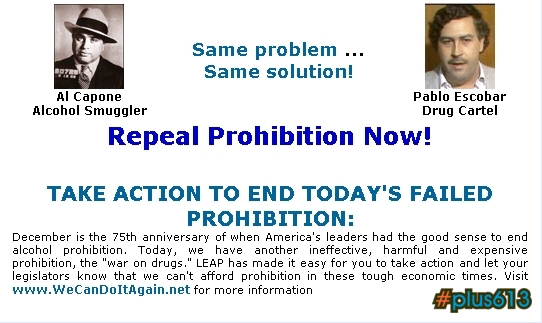
How much of the "value" of illegal drugs derives solely from their
being illegal? 75%? Drugs are "Darwin's Little Helpers", and I would
like to see them not only legal, but essentially free. All of them.
Everywhere. Time to thin the herd, folks.
If anyone over, say, 15, could walk into any Wal-Mart or pharmacy and get as
much of any drug they want, you take all the insane profits out of the whole
business. The drug cartels would be fucked. There's no point in it, anymore.
If you round up 5 million stupid people and gas them to death, you're a
"monster", but if you give them the means to do it themselves and then
walk away, that's a whole different thing, ain't it?
Mrkim Report This Comment Date: July 17, 2009 06:31PM
Lotsa merit in those comments FA.
I have long held that a core part of the attraction in drugs is that they ARE
illegal, it's somethin to get away with, thumb your nose at the system and all
that. If they were legal I don't think they'd have the same appeal or
following.
Your point is also correct in that the current cost of ma druggies are
inherently tied to the illegal aspect of 'em. Make 'em legal and the price
would drop to their knees like a priest in front of a crowd of naked alter
boys!
Legalize, 'em, tax the begeebers out of 'em and let the fools take care of
themselves. That's a thinning of the herd few of us would likely miss much
anyway

fossil_digger Report This Comment Date: July 17, 2009 06:36PM
i heard california is considering legalizing and plan to tax $50/once.....there
will be an even larger black market as a result. who will pay $200/ounce when
they can get it for 100?
fossil_digger Report This Comment Date: July 17, 2009 06:37PM
this math requires some common sense, so think hard before you spit.

pro_junior Report This Comment Date: July 17, 2009 08:10PM
$100 an ounce?! shirley you jest...
brokntoad Report This Comment Date: July 17, 2009 08:52PM
I'd pay $200 plus the $50 tax for a oz.
Mrkim Report This Comment Date: July 17, 2009 09:54PM
Jeez, my 1st lb was only $110 ... but that's been a while

brokntoad Report This Comment Date: July 17, 2009 11:49PM
OH yeah... I should clarify. I meant an OZ of green bud not mexican dirt weed.
brokntoad Report This Comment Date: July 17, 2009 11:50PM
Oh and fossil, did the woman have a pink shirt on as well?
fossil_digger Report This Comment Date: July 18, 2009 12:22AM
pink shirt? it came from msnbc, i wouldn't be surprised if pink was required
there.
Edited 1 time(s). Last edit at 18/07/2009 12:24AM by fossil_digger.
brokntoad Report This Comment Date: July 18, 2009 12:47AM
Are you so used to avoiding serious questions that you automatically avoid
stupid ones?
FrostedApe Report This Comment Date: July 18, 2009 02:32AM
Controlling behavior though punitive taxation is morally repugnant and
inherently unjust, the last refuge of scoundrels who wish to control others, but
lack the mental acuity to make a sufficiently compelling case. Fascists.
Mrkim Report This Comment Date: July 18, 2009 02:37AM
Actually it was a seldom seen variation called panama red toad, ever heard of
it?
BTW, here's one just for you. Are you really so like your buddy madnez that all
you're capable of is nifty lil zingers or is it too much to ask for you to
actually connect the few dots floatin around inside your head and formulate real
thought, then communicate it in a sane and logical manner in something
consisting of more than 2 or 3 sentences?
I'm not tryin to stretch your abilities to the breakin point or anything dude
.... just wonderin
Mrkim Report This Comment Date: July 18, 2009 02:40AM
I'm guessin that was a bit of sarcasm FA. If not I gotta tellya there's
already plenty of that pugnation in circulation. A lil more is just a drop in
the bucket comparatively

fossil_digger Report This Comment Date: July 18, 2009 05:06AM
are you going to tell me wtf "pink shirt" is?

woberto Report This Comment Date: July 18, 2009 06:30AM
Last time I smoked I saw this...

Never again...
jgoins Report This Comment Date: July 19, 2009 11:41AM
Legalizing drugs will not get rid of the drug cartels or the black market for
drugs alone. If it was legal and taxed then the drug cartels would merely lower
their prices and stay in business. The above poster was correct when he said
drugs would have to be free. If they were free then the drug cartels would go
out of the drug business for good. Sure legalizing it and taxing it would be
good for new revenue for governments but it would not bring as much revenue as
would be thought and drug cartels would still be in business. I just wish I
could find a black market for my cigarettes, the cost is outrageous right now.